

Autumn Nature Corner Arrangement Diagram: Flowers, Leaves, Pinecones
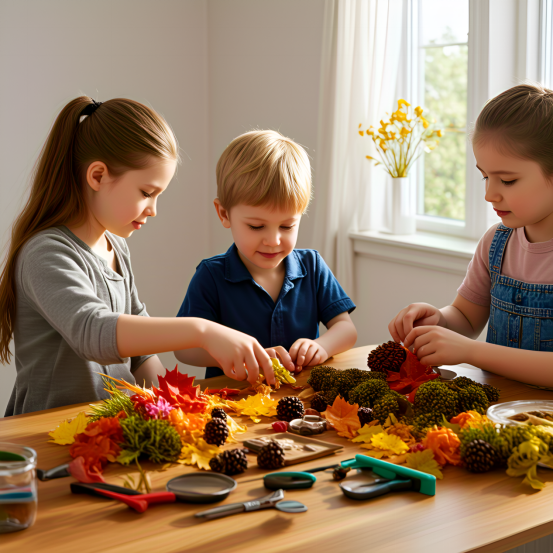
Hello Montessori enthusiasts! As autumn deepens, one beautiful way to honour the season with young children is by creating a “Nature Corner” — a dedicated space in your home or classroom where children can explore, arrange and reflect upon the natural changes happening around them. In the spirit of Association Montessori Internationale (AMI) approach and our Adena Montessori materials, I will walk you through how to design a simple, calm and meaningful autumn nature corner using flowers, leaves and pinecones. Remember Dr. Montessori’s words: “The things he sees are not just remembered; they form a part of his soul.”
Why a Nature Corner matters
Montessori pedagogy emphasises connecting children to the larger world — to nature, to seasons, to the “cosmic education” framework that helps them feel part of the whole. A nature corner invites observation, sorting, pattern-recognition, sensorial exploration and the respect of nature. The child becomes an “explorer” and “caretaker” of the environment.
Designing your autumn nature corner
l Location: Choose a low shelf or small table accessible to the child. Have a basket/tray of collected natural items (fallen leaves, pinecones, acorns, dried flowers) and a few working tools (tongs, magnifying glass, small tray, little vase for display).
l Materials: Encourage your child to gather items outside: fresh fallen leaves, pinecones, seed pods, dried flower heads, small branches. You might even include a few small pumpkins or gourds. Use a natural-wood tray from Adena Montessori to hold the items.
l Arrangement & Classification: Invite the child to sort by type (leaves vs pinecones), by shape (round vs pointed), by colour (green, yellow, brown), by size. You can create simple labels or picture cards for older children. This supports sensorial classification and early mathematics (sorting, seriation).
l Display space: Dedicate a smaller shelf where the child can place a single favourite item each day, perhaps rotate it. This honours the child’s choice and cultivates care.
l Change and reflection: Encourage revisiting the nature corner weekly: What changed? Are leaves more brittle? Are pinecones open? This invites awareness of time, change, life cycles.
l Integration with Montessori language and sensorial work: Use vocabulary: “foliose”, “coniferous”, “deciduous”, “seed pod”, “scale”, “seriation”, “grading”. Use sensorial descriptors: smooth/rough, heavy/light, flat/curved, crunchy/stemmy. This aligns with Montessori sensorial and language aims.
l Respect and care: After the exploration, children can gently clean the tray, dust off pinecones, and place items back — reinforcing care for the environment and practical life skills.

Diagram suggestion
You might create a simple diagram on poster-board: three columns labelled Flowers, Leaves, Pinecones. Under each, the child can glue or place one item from each week. Over the month, the nature corner becomes a living evolving display. Provide a little booklet where the child draws the items and writes (or you write together) short notes: “Week 1: green leaf. Week 2: brown leaf with spots. Week 3: pinecone opened.” This supports the Montessori aim of child-driven documentation and self-correction.
Tips for families
l Go outside when the leaves are crisp and dry — children will love the “pop” underfoot, the sound, the crisp smell.
l Make sure all items are safe (no mold, no sharp broken pinecones) and explain gentle handling: we wear gloves or use tongs.
l Rotate a few items out each week so the display doesn’t become static; children often re-engage when something is slightly new.
l If you have siblings or mixed ages, offer “big partner, small partner” work: older child helps younger select items, younger sorts with simpler categories — building social, cooperative work.
FAQ
Q1: What age is appropriate for a nature corner?
A: From about 2-3 yrs upward, children can meaningfully engage. Younger children may simply explore textures and enjoy placing items; older children (4-6) can classify, reflect, document. The prepared environment adapts to the child’s plane of development (0-6 yrs in AMI/ Montessori context).
Q2: What should I avoid?
A: Avoid overwhelming the space with too many items, bright plastic decorations, or heavy adult-led instruction. The child should direct the work. Also avoid items requiring excessive adult help — keep independence in mind. As Dr. Montessori reminded us, “Never help a child with a task at which he feels he can succeed.”
Q3: Can we bring this into a classroom setting?
A: Absolutely. In a Montessori classroom, you might have a dedicated nature shelf and rotate items weekly. Children can select and work independently, perhaps pair up for collaborative classifications. Make sure the space remains calm and orderly, and the teacher’s role is as observer and guide, not director.
Q4: How do I link this to other subjects?
A: Many ways! Language: children label items, write short descriptions. Mathematics: sort, grade, count, match. Practical life: using tongs, brushes, trays. Sensorial: exploring textures, weights, sizes. Science: discussing seasons, tree types, seed dispersal. Culture: linking autumn traditions and natural cycles. That’s the Montessori “cosmic education” in action.
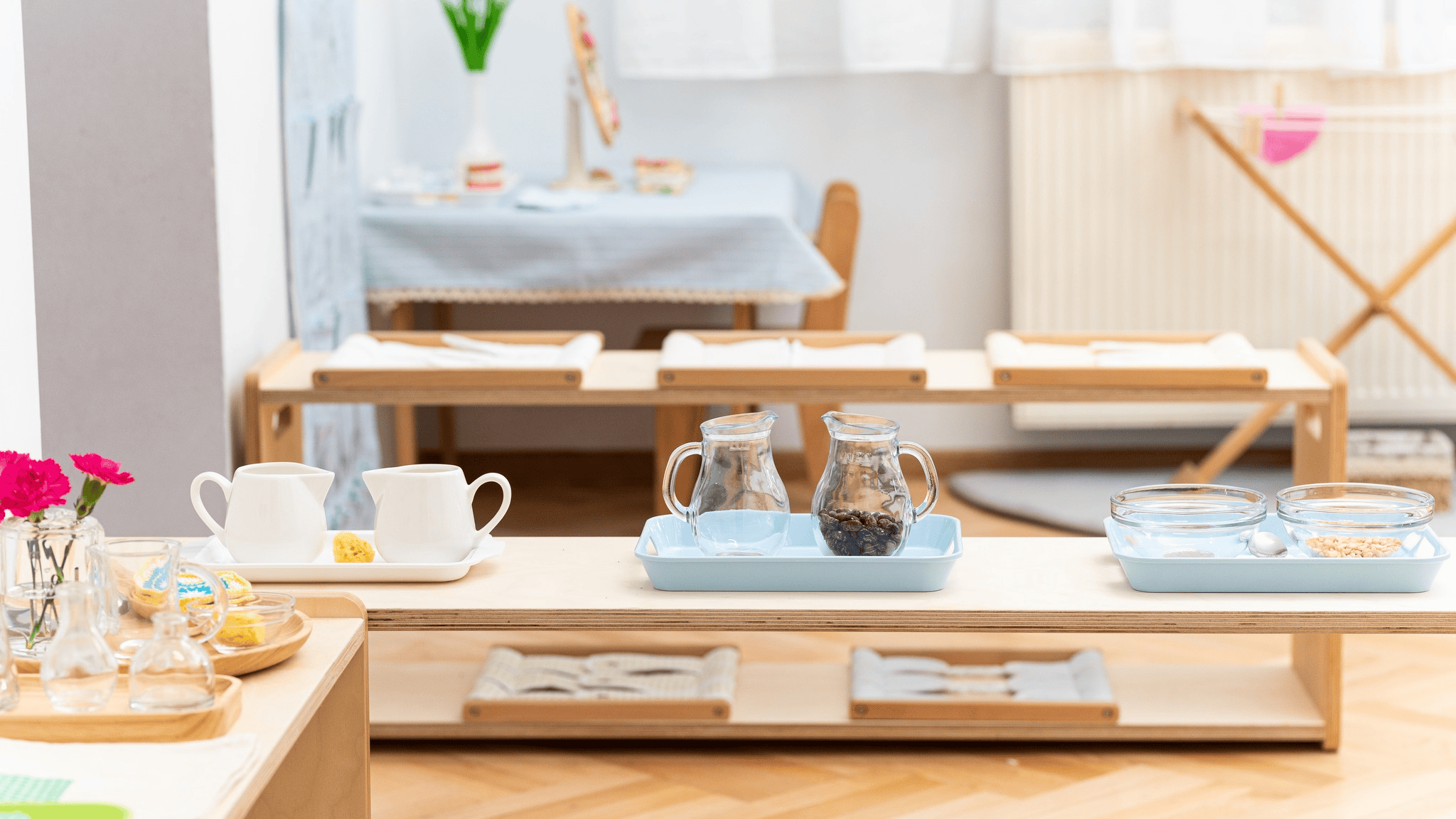 Back-to-School Anxiety: Montessori Tips for a Smooth Transition
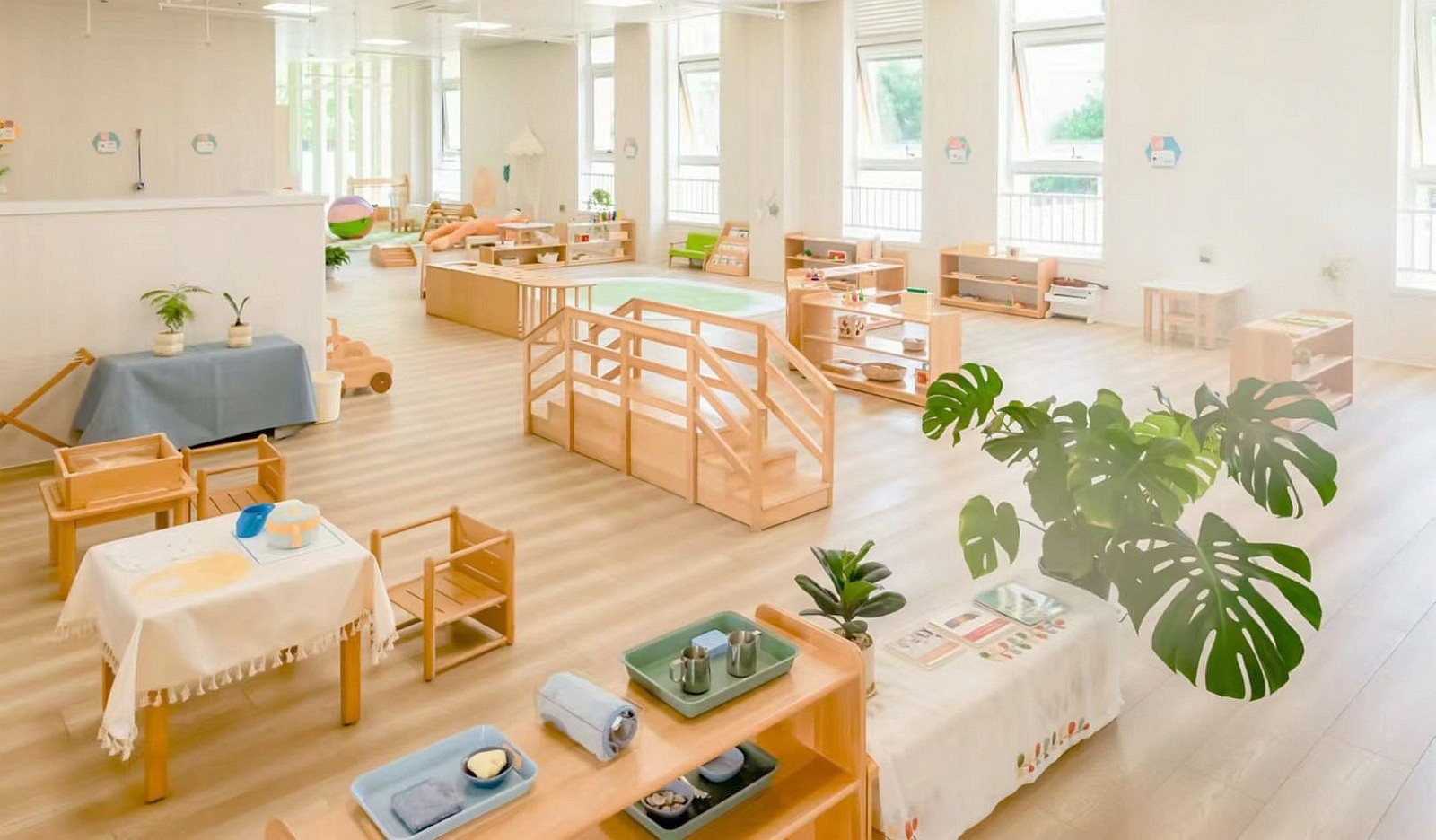 Back-to-School Checklist: Montessori Study Corner Setup | Adena Montessori
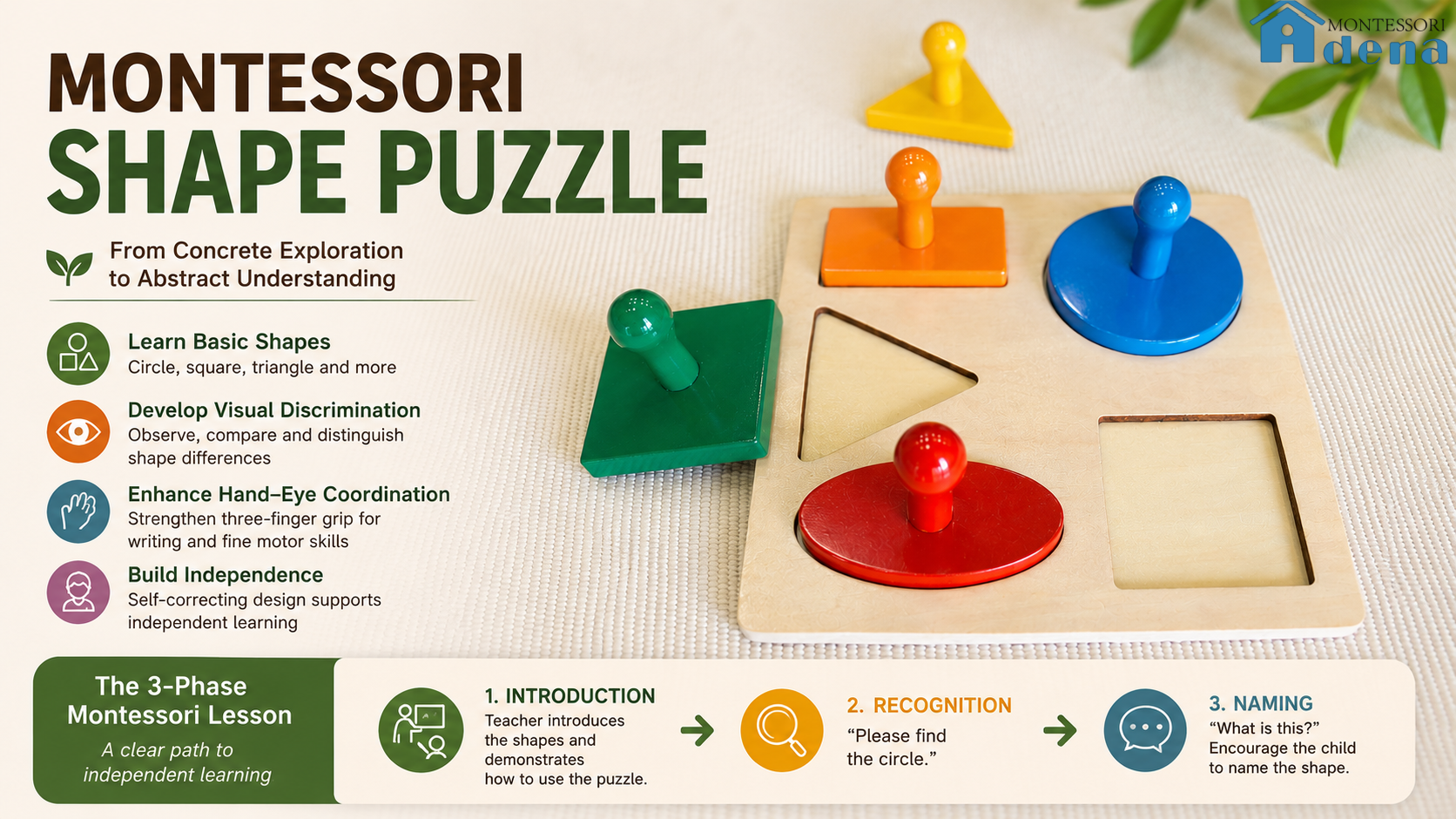 Why Montessori Children Use Geometry Cabinet Before Writing | Pre-Writing Skills
 Montessori Metal Insets: Why Children Use Them Before Writing