

Grace & Courtesy Lessons Raising Polite and Empathetic Child
Hello dear friends in the Montessori community! A foundational but often under-discussed element in the Montessori space is the practice of Grace & Courtesy — those small, daily social rituals and behaviours that reflect respect, empathy, independence and community. As Dr. Maria Montessori reminded us, “The adult ought never to mould the child after himself, but should leave him alone and work always from the deepest comprehension of the child himself.”
In my role as an AMI-trained 0-6 years Montessori trainer and international network marketer for Adena Montessori, I want to share with you how we can weave Grace & Courtesy lessons naturally into the home and classroom, raising polite, empathetic children who can engage socially with confidence.
What is Grace & Courtesy?
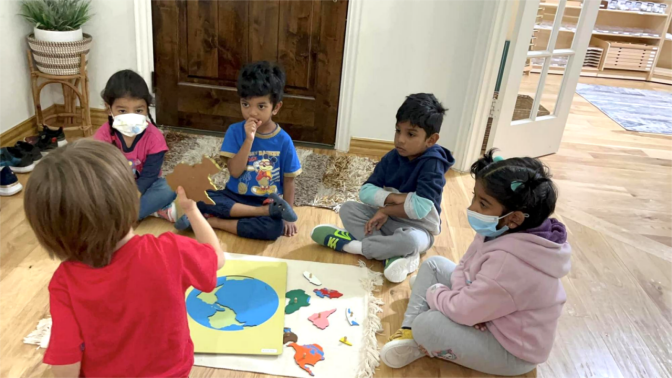
Within Montessori pedagogy, Grace & Courtesy are not optional extras; they are integral to the prepared environment and the child’s social development. They include: greeting others, offering help, asking for help, moving gracefully, welcoming a guest, saying “please/thank you”, sharing materials, waiting one’s turn, caring for the environment, and resolving conflict peacefully.
How to introduce Grace & Courtesy lessons
l Model calmly: Children learn first by observing. Let the adult demonstrate greeting a child, saying “Would you like to join me?” or “May I borrow the red cylinder please?” Use normal tone, no praise needed.
l Use role-play or “Invitation” cards: Create simple scenario cards (e.g., “A friend comes to play, you welcome him”, “You spill something, you ask for help and clean up”). Using Adena Montessori* small invitation-cards makes this tactile and accessible.
l Provide materials/trays: For example, a “borrowing tray” where a child picks a card, then physically borrows a material, says the polite phrase, uses it, and returns it with thanks. This reinforces independence and social grace.
l Teach movement and gesture: Montessori environments emphasise calm, measured movement. Encourage children to walk slowly, carry trays at waist height, place materials gently back, and make eye‐contact if culturally appropriate. These are part of Grace & Courtesy.
l Reflection and discussion: After an activity, you might ask: “How did you feel when you were the one being welcomed? How did you feel when you welcomed a friend?” This builds empathy and language around emotion and social interaction.
l Consistency and repetition: These lessons are embedded across the day: snack time, clean-up time, outdoor transition, partner work. Over months, children internalise polite habits and become socially confident.
Benefits for the child and environment
l Builds social independence: The child isn’t waiting for the adult to tell them what to do; they know how to behave politely in community.
l Strengthens community feeling in the classroom/home: A prepared environment where everyone uses courteous language and kind gestures becomes calm, respectful and cooperative.
l Supports emotional regulation: Children who have been guided in saying “I’m sorry” or “May I join you?” are better able to navigate peer relations.
l Links to concentration and calm: As the environment for others is respected, the child’s own concentration improves. Dr. Montessori’s insight: “The child who concentrates is immensely happy.”
Tips for parents
l Avoid excessive praise like “You were so good” — that can shift the child’s motivation to please the adult rather than internalise politeness. Instead say: “Thank you for offering your friend that work.”
l Use real life situations: door-opening, guest arrival, phone ringing, snack sharing — these are real opportunities.
l Create a “Grace & Courtesy corner” in the prepared environment: simple prompts, cards or booklets, and a small shelf where the child can choose and practise. Use trays from Adena Montessori if you like.
l When mistakes happen (interrupting, snatching toy), stay calm, model the correct behaviour: “Oh, you wanted that? May I borrow when you’ve finished?” Then give child space to try. Avoid long lectures.
FAQ
Q1: My child is shy and seldom speaks — is Grace & Courtesy still appropriate?
A: Yes — the focus is on gestures, offers of help, eye-contact, small phrases. You might start with non-verbal invitations: “Would you like to carry this tray?” Then gradually include short phrases. Shy children benefit from predictable, repeated opportunities.
Q2: What about cultural differences in social gestures (e.g., eye-contact, bowing)?
A: You should adapt to your family culture. Montessori principles emphasise respect for the child’s environment. So choose respectful gestures appropriate to your context and consistently model them. The key is calm invitation, freedom within limits, and social respect.
Q3: How often should we embed these lessons?
A: Ideally daily in small ways: greeting, snack sharing, borrowing. Formal card-invitation sessions might occur once or twice a week for 10-15 minutes. The rest arises naturally. The prepared environment supports spontaneous use.
Q4: Do we need special materials?
A: No. The smallest investment — maybe a few cards or a tray — is sufficient. What matters is the adult’s consistent modelling and the child’s freedom to practise. Adena Montessori offers well-crafted trays/cards if you prefer premium materials, but DIY is also fine.
 Back-to-School Anxiety: Montessori Tips for a Smooth Transition
 Back-to-School Checklist: Montessori Study Corner Setup | Adena Montessori
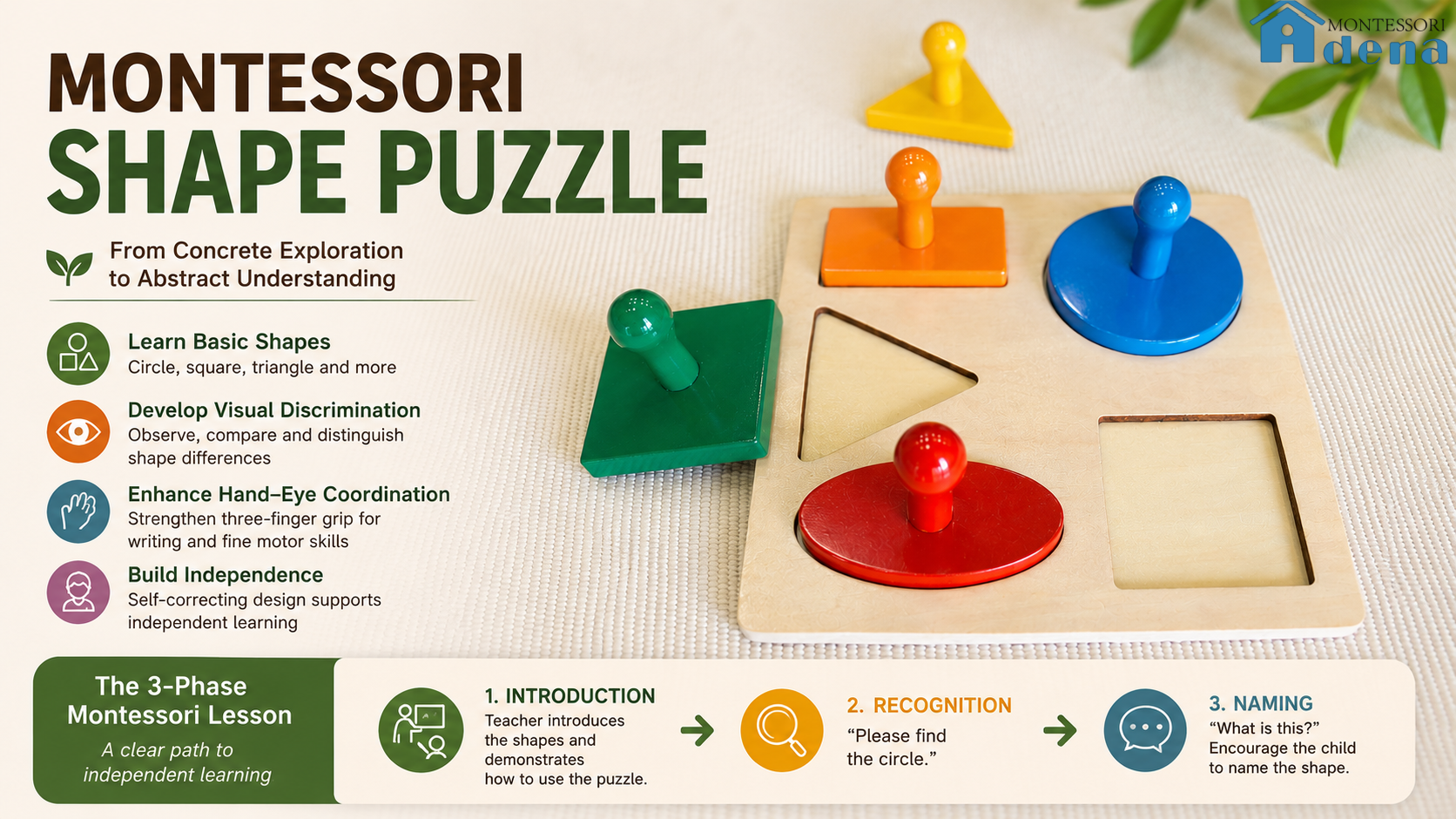 Why Montessori Children Use Geometry Cabinet Before Writing | Pre-Writing Skills
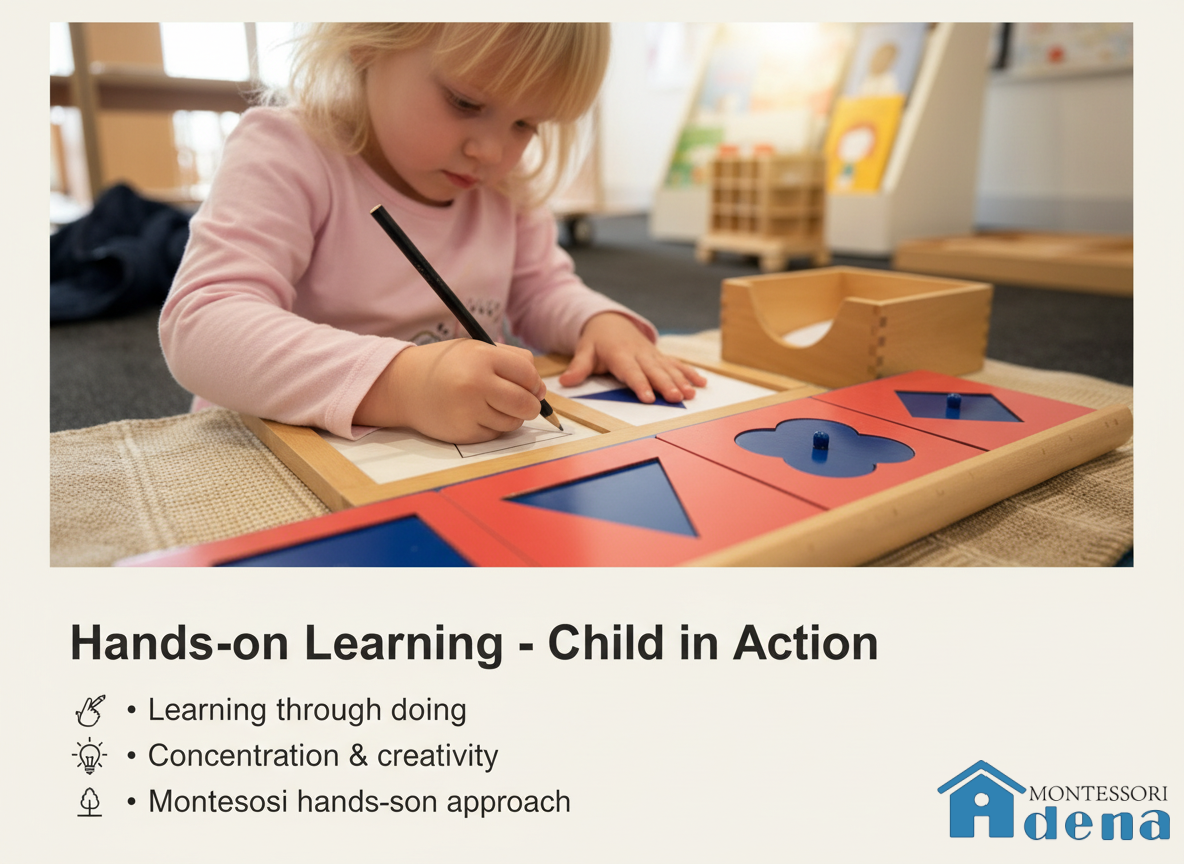 Montessori Metal Insets: Why Children Use Them Before Writing